Thursday, July 30, 2020

Join me for an early morning walk around Shepparton

Join me, if you will, on an early morning walk through the streets of Shepparton.

This will be shorter than usual, but still equally interesting and we will get to meet some local heroes, well, not meet them, but see them.

Just for the day will be flâneurs, that’s French for someone who saunters around observing society, but we won’t sauntering, we’ll be walking, although still observing.

To make it easy, we’ll meet at the Caltex service station in Archer St and remember it’s early morning, probably cold and the sun hasn’t cracked the horizon yet.

We’ll head north and almost immediately we are passing what was Karibok Park where for years the small sports oval was used for cricket, soccer and occasionally, illegally for golf practice.

And of course things have changed.

The Karibok Park sign is gone and behind the pole on which it once hung is the partly built $10 million new Shepparton fire station.

Walkers once had to keep and eye out for a fast moving cricket ball driven by an enthusiastic batsman which has eluded all the fielders or an errant soccer ball, but now it is tradies, trucks or some sort of excavation.

And here we see our first local heroes as although not yet daylight, some of the tradies are all ready busy setting up for the day, rugged up against the cold, and yet some are wearing shorts.

We cross the nearby Woolworths car park and we encounter another hero, a company employee armed with a mechanical claw picking up discarded bits and pieces. It’s cold, but she keeps warm as she enthusiastically scouts the area for rubbish.

Let head around past the SPC factory and again we see a whole bunch of our heroes filing in for a day putting the stuff we produce on our farms into cans.

Into Andrew Fairley Avenue a place where a few years ago a whole bunch heroes took to the street to successfully protest plans to close what they considered to be, and is, an important thoroughfare.

Then we walk around the corner into Hawdon St to be ambushed by controversy - here the old Shepparton High School is being demolished to make way for the new Greater Shepparton Secondary College.

One fellow helping with the demolition of old multi-story building next to the original part of Shepparton High School thought the idea of combining all the schools in one site sounded good,

although he was unaware of social disruption the new school had brought down upon the city.

Again, more heroes, knee deep in rubble mostly unaware the some in the city are equally deep in robust discussion about the rights and wrongs of what will be a whole new way of educating our kids.

Then we head past the partly completed new GV Connect building in Bowenhall St.

The multi-storey commercial-like building seems a little out of place in what is a residential area, but the centre has operated there for many years and it has always be quite comfortable in the neighbourhood. That place is packed with heroes.

We head down Knight St and and the revamped and freshened Notre Dame College is on one side and on the other St Brendan’s Catholic Church behind a fence; a fence that became one of Victoria’s “loud fences” acknowledging the heroes who had survived institutional abuse.

Pressing on, next we pass the Maude St site of the new Ace College and although it is still quite dark a cement delivery truck is perched on the footpath, ready to unload just as soon as the tradies are ready to go - more heroes, it’s cold, some are in shorts and hard hats, which appears to be a contradictory combination.

Let’s keep going, down Fryers St, through Monash Park, but as you pass and over to your right is a monument to our heroes from Australia’s many conflicts; through the colourful underpass between the park and the shared path that leads to Victoria Park Lake, simply an heroic place.

Daily walks take me past it most days and soon it will be even grander and richer place with the completion of the new Shepparton Arts Museum.

Art itself is another of our heroes as it is at the root of the renaissance of our lives and it only seems right that we celebrate in such a magnificent way in such a wonderful place.

Let’s head home, checking as we go the pedestrian path at the High St rail crossing where someone, frustrated they were being directed by a purpose built fence had kicked part of it down only to see their efforts denied by some good soul who had reassembled it with coat hanger wire.

Back home, about 6000 steps later, feeling refreshed, more aware of what’s happening in Shepparton and pleased to be in out of the cold and ready for breakfast.


Sunday, June 14, 2020

Beautiful indigenous girl born in the shadow of George Floyd's murder.

Last week I meet an indigenous girl, she was just six-weeks-old, and beautiful!

The first weeks of her life have been shadowed by the protests and events following the death of American black man, George Floyd.


Watching her lie on the nearby couch with her spectacular crop of hair and bathed in innocence, I struggled to understand how and why this small black girl, well, at least her colour, could have such a seismic-like impact on the world.


It was a knee on the neck that killed George Floyd and it saddened me to contemplate the challenges ahead for this tiny girl.


Yes, we will have our “knee” on her neck and unless we change our behaviours, and that’s almost completely, this tiny black girl faces difficulties that us “white-fellas” simply don’t understand.

Azaria is family and interestingly, and coincidently, that connection runs much deeper as I went to secondary school with one of her mob, worked with another and knew the third through a rock band all three played in.


The trio of brothers have been remarkably successful - the eldest, whom I worked with, was born in Mooroopna after his parents were among those who walked off the Cummeragunja Station near Barmah to protest poor living conditions and settled at “the flats” just off The Causeway been Shepparton and Mooroopna.


Clive was a printer, and I a young reporter at Echuca’s Riverine Herald, when we first met and Clive, who has travelled the world, is now a celebrated commercial artist.


His young brother Graham, whom I went to the Echuca Technical College with, has long played a lead role in social justice and land rights for indigenous Australians.


The State Government’s Aboriginal Victoria website says: “Graham Atkinson is a community leader committed to social justice and empowering individuals. The Dja Dja Wurrung and Yorta Yorta Elder is an untiring advocate for Traditional Owner groups and was one of the architects of an alternative system for settling native title claims in Victoria”.


Their brother, Dr Wayne Atkinson, is an honorary doctor of political sciences lecturing at the University of Melbourne - Azaria has impressive linage.


Racism in Australia is, despite what many think, deep seated and this tiny, absolutely innocent and beautiful girl has a difficult path to walk as she confronts stereotypes dating back to the arrival of white man in the 18th century.


Attitudes to our indigenous people have barely changed as we have always brutalised and killed them, marginalised them and at every turn put them in the category of the “other”, and always, despite those injustices, most have remained silent.


Talking  with Ben Fordham on 2GB, our Prime Minister, Scott Morrison,  lamented what was happening in America and then went onto to say: “And I just think to myself how wonderful a country is Australia. We have our problems. We have our faults. We have our issues. There's no doubt about that. But when I see things like that, I'm just very thankful for the wonderful country we live in.”


Well, that “wonderful country” appears to look the other way, close its mind and remain silent when it comes to caring for our indigenous people.


A 1991 Royal Commission into Aboriginal Deaths in Custody documented  99 deaths in custody and since then more than 400 Aboriginal and Torres Strait Islander people have died while in our care.
Yes, 432 deaths in custody and not one perpetrator named. Let’s repeat that, 432 indigenous people have died in our custody and no-one has been held accountable.


Charges subsequent to that string of tragedies were rare, none were proven and we, as a nation, have sidestepped responsibility at every turn.


I wish Azaria well and I wish, Australians would do more to ensure no knee will ever be pressed upon her tiny neck.

Sunday, January 26, 2020

If you love Australia, climate change should scare the hell out of you

I love Australia.
Bushfire
Australia is a nation on the extremities, where climate change
 will affect and strip away what we love much sooner than
will occur in Europe and North America.’
It’s not a thing you hear too often from progressives. Mostly this is because we don’t go in for the pathetic jingo-nationalist, quasi-militaristic “love it or leave it”-style patriotism that John Howard attempted to link with a love of country.
But I do love Australia. I get an absurd amount of irrational pride when I hear of Australians doing well.
When I read stories that Indigenous rock art might be among the oldest in the world I get excited and think, yeah suck it, caves of Cantabria!
I can still remember where I was when John Aloisi scored the winning penalty against Uruguay (jumping up in my home in Cairns and cutting my hand on the overhead fan), and like all sensible Australians I let out a deep groan whenever I hear someone start yet again an “Aussie, Aussie, Aussie” chant at the tennis.

Read the story from The Guardian by Greg Jericho - “If you love Australia, climate change should scare the hell out of you.” 

Friday, January 24, 2020

Wondering about the difference between a nice person and a good person

Have you ever wondered about the difference between a nice person and a good person?

It’s not something I had thought about much, well, not at all really, until my son said he considered himself a “nice person”, while his sister, he said, was a “good person”.


A nice person, he argues, is someone who never upsets another, lives a quiet life, is agreeable in every sense, avoids any sort of confrontation - verbal or physical, is polite, courteous and never refuses a request for assistance, but of course help is never offered until the request is made.
Associate Professor Anitra Nelson.


His sister, according to him, is a good person and while she has all those “nice” attributes, she never avoids a verbal confrontation and without hesitation calls out anyone whose behaviour, verbal or otherwise offends personal or societal mores.


My son, I like to think is a reflection of myself as I have always considering myself a “nice person”, a claim, I’m sure, many would question, doubt or even laugh about.


Whatever, I’ve always seen my life though the prism of “nice”, but sadly events have forced a serious rethink as nearly 15 years of listening and reading have left me with no option to reconsider how I respond to the musings of others.


The damage you and I have done to Earth’s atmosphere is clearly evident and anyone who doesn’t respond by helping mitigate our carbon dioxide emissions or help us better understand and employ adaptive ideas, needs to be called out as by implication they stand with those who deny the reality of the climate crisis.


A nice person would “roll with the punches” and good person would demand better, and so say.


Of course there is another option; an option suggested by former New South Wales fire commissioner, Greg Mullins, who’s said that when people doubt and question the connection between climate change and Australian bush fire crisis, we should just smile politely and walk away.


Sound and “nice” advice, but for me “walking away” is over.


This is going to be tough as to confront another and question their values and ethics is contrary to my nature and in keeping with youthful climate activist, Greta Thunberg, I rely on the facts and trust the people will see the error in their thinking, and behaviours, and change their ways.


That doesn’t work, facts don’t change minds, but as Scott Morrison illustrated in the last year’s federal election victory, emotion and stories based on fanciful information structured around fear of the other, and baseless numbers seem to comfort people and carry the day.


To further complicate matters, while able to understand the broad concept of climate change, I struggle to regurgitate the facts and so argue my position.


The facts, it seems to me, are so clear, so damning and so obvious that simply presentation of them should be evidence enough.


The recent bushfires that swept through parts of Australia are little more than a taste of what is ahead - the world has warmed by just over one degree Celsius and the Paris agreement, which is championed repeatedly by many, including our PM, and has programmed the world for an increase of about 3.5 degrees Celsius.


The root of our troubles is the prevailing economic system, commonly known as “neoliberalism” that promotes and encourages individualism, an idea that puts the success of one ahead of the many.


With that system comes privatisation and the steady erosion  of the public sphere and what Canadian author Naomi Klein describes in her appropriately named latest book,”On Fire”, as the “gig and dig” economy where jobs are not jobs, but precarious “gigs’ and the ‘digging’ up of fossil resources.


And contrary to what former Nationals leader, Barnaby Joyce, argues, we need more government in our lives for a thorough and honest examination of what make this modern life possible illustrates it all began through the government, that is public, intervention.


Thinking of what exists reminds me of the American Indian adage: “If you want to go fast, go alone, if you want to go far, go together”.


So, fundamentally, if we want to navigate this dilemma we need to invest heavily in the public sphere, redistribute wealth (an anathema to many), stop the wholesale privatisation of our lives, understand that our status is not attached to our acquisitions, and as RMIT associate professor, Anitra Nelson, points out, we all need to learn how to share.


Others, of far greater importance than I, have also stepped aside from nice and and taken up the”good” baton and one of the those is Nobel laureate, Professor Peter Doherty.


Professor Doherty, who spoke in Shepparton last year, said in a tweet: ”Get mad not sad! Be mad as hell at politicians who won't act and the media liars who support them. Be mad at stupidity and ignorance. Rage at the fossil fuel types who screw your world (and theirs) for a few lousy $”. 


Thanks, Peter, I’m not sad, rather I’m “good”, and mad.

Sunday, December 15, 2019

UN climate change talks in Madrid end with no agreement on carbon market rules or stronger pledges

Marathon international climate talks have ended with major polluters resisting calls to ramp up efforts to keep global warming at bay and negotiators postponing the regulation of global carbon markets until next year.
Image result for cop 25 logo

Those failures came even after organisers added two more days to the 12 days of scheduled talks in Madrid.
In the end, delegates from almost 200 nations endorsed a declaration to help poor countries that are suffering the effects of climate change, although they did not allocate any new funds to do so.
The final declaration called on the "urgent need" to cut planet-heating greenhouse gases in line with the goals of the landmark 2015 Paris climate change accord.

Taking 'possession' of a public space

Long have I admired those who take “possession” of a public space and make it theirs.

An example of that can be seen just off Shepparton’s Broken River Drive near the Melbourne Road bridge over the Broken River .


It was once the home of the Jackson family, but with the sale and removal of the house it became a neglected piece of river frontage until a local took “ownership” of it, treated it like his own, cared for it, beautified it to make it a place people frequently visited - there has even  been marriages there.


The City of Greater Shepparton came to appreciate its value to citizens, took it over and named it “Jackson Park”. It’s a beautiful spot, simple but   worth a visit.
In a similar case, I watched, during several annual visits to Queensland’s Sunshine Coast as something similar happened.


A war memorial had been established in the small park on the banks of Maroochy River at Maroochydore and although the memorial itself appeared OK, the surrounds were in need of maintenance, some simple love and attention.


A local fellow, who was a veteran of the Vietnam War, was distressed about the state of the memorial surrounds and so decided to do what he could to make the site worthy of the people it honoured.


He mowed the lawns, weeded what garden still existed, planted some new flowers and generally broadly improved the memorial’s surrounds.


My friend, yes I met him and talked with him about what he was doing, fell foul of what might be called “officialdom”.


His volunteer work was spotted by the local council and he was told he must stop immediately as the council’s public risk insurance did not cover him and the likelihood of him being injured in a “workplace” accident was risk it couldn’t take.


Fortunately a workaround was agreed on, my friend became a part-time, unpaid council employee and he was able to continue with his work on the memorial site.


My visit to the Sunshine Coast have become less frequent in recent years, but I understand the council now recognises its responsibility for the memorial gardens and so it is now a rather pleasant spot.


Where’s this all leading to?


Not for a second did I imagine that such a sense of ownership of a public space awaited me.


It’s not so much a space, more a piece of public infrastructure.


Living not far from Shepparton’s railway station and traveling whenever I can by “human-powered transport” - that’s walking, but it can be cycling - I frequently use the southern pedestrian crossing at Shepparton’s High St railway crossing.


For some inexplicable reason people seem to think it’s good place to dispose of their rubbish - bottles, cans, food wrappings, bits of clothing and packaging from store bought goods.


Picking up and disposing of the rubbish was just a casual thing at first, but it has become something of an obsession and I get grumpy when people drop their rubbish there as this is “my” spot.


Just recently things took a turn for the worst when somebody decided they wanted to make some adjustments, commonly called vandalism, to the metal fencing put there to protect pedestrians.


At first it was just a small dent, then a whole panel was knocked loose, which for a while I could stand up and make the place look presentable, but then one of the metal posts was knocked out of the ground and a whole panel flattened.


Unsure what to do, I inquired at the railway station and a fellow behind the counter said such things were not really their responsibility and so he gave me a Melbourne phone number.


That call quickly became a long and difficult phone affair as the fellow there thought I wanted to move a boundary fence on railway property in Shepparton and after being put on hold, twice, while he talked with his supervisor, I was then given another number.


The second phone call was, in its own way, equally difficult, but I had some success and the fellow said he would organise the repair work, and even gave me a case number.


Although encouraged by what seemed like success, I imaged months would pass before anything happened, if at all.


Surprise, surprise! In less than a week a team of three men, well equipped, appeared and in just few hours repaired “my” damaged fence.


It now looks wonderful and “my” space is back in good order, and I’m chuffed.
Our Earth needs us to be more attentive to our home however, if that is too big, too complex then how about “taking possession” of tiny public space right here in Shepparton.

Thursday, September 12, 2019

Coping with Climate Change Distress

There has been a recent flurry of articles and radio stories regarding the rise of climate grief and ecological anxiety in Australia and abroad. 

For some support and advice on living with such distress a number of groups came together to publish this pamphlet on coping with climate change distress.


Read the pamphlet, download it here - “Coping with Climate Change Distress.

Wednesday, September 11, 2019

Living in an echo chamber, just like everyone else


I live in an echo chamber.

I read about the climate crisis, frequently; I hear about the climate crisis, many of my friends talk about the climate crisis; often, I travel to and from Melbourne to listen to lectures about the climate crisis; I’m involved with two Shepparton-based groups focussed on climate matters; I maintain a blog (“Beneath the Wisteria”) and several months ago started a podcast (“Climate Conversations”) that are both about helping others better understand what damage we have caused to the world’s climate system.


Image result for hope dies last  studs terkel


And just a week ago I was in Myrtleford for a day-long conference/launch of a project to embed climate adaptation in agriculture.

 Further, last Saturday week, I spent the day at the Tatura Transition Towns annual film festival entitled “The Power of Youth”, which, in its own way, was an extension of the “School strike for Climate” movement.

And is that out of balance? 


No, not at all, especially when you consider the blinkered view of others who see the world through the prism of economics and profit, and so work tirelessly to maintain a way of life that is at odds with our wellbeing and is herding humanity toward an existential apocalypse.


And do I have hope? Well, most days yes, and others not so much. My spirit rises and falls, but to be without hope would be to deny my humanity and so I cling to the idea of American author Studs Terkel who said: “Hope dies last”.


What we understand as the market system can justifiably claim many of the advances enjoyed by humanity, but its sustenance in the last six decades, in particular, has seen the atomization of society leading to the stupendous enrichment of a few coupled with poverty and inequality in many corners of the world.


Ancient Greece philosopher, Aristotle, lamented, even then, the inbuilt damning contradictions of the market system, but I write with care for American professor and author, Steven Pinker, has dedicated entire books to reminding his readers just how good life is for most people.


The idea of doom prosecuted by much in the media distresses Pinker and in his view does not fit with daily realities presently faced by many around the world.


Pinker, of course, has made judgements about contemporary, tangible and understandable matters, but the climate crisis is, as writer and consultant Roger Molins, says is quite different; it is intangible.


“We do not perceive climate change as it is, we do not touch it; it absolutely defies the definition of what a thing is.” he writes.


Yes, the facts are grim but they alone will not change our behaviour and it was only last week that Dr Margret Hickey, speaking at Shepparton’s La Trobe University, when discussing writing through the Anthropocene, pointed to stories, true and otherwise, as being the lever that shifted humanity. 


Many practical things will help us mitigate the causes of climate change, and adapt to its unfolding difficulties, but the essence of who we are is to be found in our stories; stories that need to be told, urgently.


Saturday, August 24, 2019

Dad became the 'man-of-the-house' at just four-years-old.

My dad was just four-years-old when his father died.

Dad had two younger sisters and so effectively only a baby himself, he instantly became the “man” of the house.

My dad's swing-saw looked a lot like this.
My grandfather, dad’s dad, was something of an enigma to me as anyone who actually knew him was dead before I arrived, and any record of his life is slight or simply doesn’t exist.

We do know that he owned and operated stables in Echuca’s main street, opposite the Catholic church and stretching through to High St.

He died when a horse kicked his head and we don’t know if that was instant or he died later. I could research it I suppose, but it is not in my nature to look back, despite knowing that preparation for the future is best founded on an understanding of the past.

Dad died in 1992, on my wife’s birthday sadly, and I thought a lot about him as I sat listening to Professor Brendan Wintle talk about the million species at risk of extinction.

An eager interest in the topic was piqued when he asked the audience what is was that posed the greatest threat to Australian mammals.

The audience response was as expected, covering all the usual suspects such as cats, forest clearing, urban sprawl and cars, but Prof Wintle surprised most everyone when he declared it was “rabbits” which were decimating our mammal species. They eat all the grass and leave nothing for others.

Dad had matured quickly into the man of the house and by the time he had reached double figures he was supplementing the family larder and income by catching and selling both rabbits and mussels.

And although rabbits, which were then a pest and still are, might give us reason to curse them for the devastation they cause to our landscapes, there was in fact a vital source of sustenance for many Australian families early last century.

Dad, who rarely talked about himself and you had to drag the stories from him, told of coming home from a rabbiting expedition with nearly more rabbits than he could carry hanging all over his bike.

He said that they were in such proportions one year that if confronted by a fence they were unable to get through, they would chaotically pile up at the fence until the late arrivals could rush over the squirming bodies of their compatriots to clear the fence.

It was during those plagues, he said, that the paddocks themselves appeared to be moving - they were effectively alive with rabbits.

Dad had little education and tried his hand at many things before becoming a beekeeper, and eventually the president of the Victorian Apiarists Association.

As much of the specialised equipment he needed wasn’t available in the pre and post First and Second World War eras, he was forced to design and build his own, including a caravan-like extracting plant and a huge shed with two insulated “warming rooms” critical to the honey extraction process.

Being a beekeeper and so working in what was considered an essential industry - bees wax was needed for weapons sent to the tropics - his attempts to enrol in the armed forces were denied.

As he was one of the few men in what was largely a “men-less” community, it was his task to provide the wood for many families and so about then he dreamt up and built a swing-saw - a rather large blade on the end of a long a metal arm and powered by a small motor that allowed him to move and saw up logs.

Many watching him build it said it would kill him - it didn’t and worked just as he imagined.

And how we need minds like those of my dad now!  He was resourceful, resilient, inventive and because of the life he was born into, he inherently understood the three R’s we all need to hold close now - reduce, reuse and recycle.

And we just don't get it!

We just don’t get it.

Or, maybe we do understand but feel overwhelmed and impotent.

Or, maybe the busyness and demands of modern leave our pool of worries full to overflowing.

What frightens us most in a madman is his
sane conversation” - French novelist, Anatole
France wasn't talking about Australia's PM,
Scott Morrison, but he could have been.
Or, maybe we have faith in our decision-makers and leave it to them believing they have the answers.

Or, then again, maybe we just don’t care.

Well, whatever, we still don’t get it

We are facing, and yes, “we” includes all of us here in the Goulburn Valley, is an existential crisis.

Extreme, over the top? Well, not really as we, and again that, of course, includes all of us here in the Goulburn Valley, have had complete disregard for the global commons as we use it as a place to dump whatever it was we didn’t want.

The science we all champion, but interestingly not “all” of us, particularly when that same science refutes personal ideologies, has toted up the cost of our flagrant abuse of Earth’s commons illustrating that humanity is now saddled with a debt beyond its means to pay.

There is, however, just the slightest of chances that we can settle that debt and it won’t be with money, rather, it will be with hitherto unseen changes in our behaviour.

Writing in The Washington Post about this unfolding dilemma and how to confront it, author Bruce Beehler said: “One thing is for sure: We need to believe so to be able to function at full capacity as concerned citizens.


“We should all spend more time outside to breathe in the fresh air, salute the songs of birds and trills of toads, and savour nature. The fact is, the antidote to the depressing true stories purveyed by the news is the joyful abundance of thriving nature all around us. Nature isn’t dead; even our backyards tell us so if we’re willing to pay attention.”
He added: “Only smart collective action, led by courageous people working with intelligent and well-funded organizations and agencies, can mount the necessary effort to keep our Earth from peril.”
“With an inoculation of the magic elixir of bountiful nature, we can engage with spirit on behalf of our wildlife and forests, our bays and seas, and our one and only atmosphere. Despair is not an option”, Beehler concluded.
People here in Goulburn Valley may imagine themselves remote from the problems of a changing climate, but they are wrong as any observant soul will have already seen changes in weather patterns.
Many of our decision-makers insist Australia’s contribution to the worsening of climate change is so small that as a nation we can do nought, and as we can have no impact we should simply continue with our present energy-rich consumptive lifestyles.
Anyone prosecuting this argument, from our Prime Minister down, is misleading us, relying on “thoughts and prayers” when scientific facts illustrate, conclusively, that what we need are decisions and actions, such as phasing out all fossil-fuel energy favouring renewable sources and the incorporation of a climate emergency/crisis into the decision-making process.
That’s high level, but what can people here in the Goulburn Valley do?
Leave their car in the garage, walk or cycle whenever possible; only fly when there is no alternative, and then only when it is absolutely necessary; plug up the gaps in your house making it cheaper to both heat and cool; encourage the City of Greater Shepparton to declare a climate emergency; become active, make a noise and push for changes wherever you can.
Listening to our PM Scott Morrison following the outcome of the  recent Pacific Forum, I could think only of what the late French poet, journalist and novelist, Anatole France, said: “What frightens us most in a madman is his sane conversation.”

Friday, July 5, 2019

Visit Australia and enjoy a variety of 'shitfuckery'

In launching season two of the new Honest Government Ad,  Giordan from Juice Media said:

Image result for juice media“Thanks so much to everyone who gave me feedback on the preview which I posted at the start of the week, and a big shout-out to Leanne for coming up with the genius “Authorised by Tourism New Zealand” message at the end! (proving that sometimes the best “Authorised by” messages are the ones that are completely unexpected haha). I really love crowdsourcing input, so I love that we can do this from time to time :)

“If you were around when we launched the very first Honest Government Ad, all the way back in 2016, you might remember that it was also called Visit Australia. Lucy and I made it in just a day. It seemed like a fun idea to try out. We had no budget, no actors (only Lucy’s voice), no animations - and NO idea this would turn into such a beloved ongoing series.

Z”Here it is in case you're curious: https://www.youtube.com/watch?v=V41-uYPXw6I

“So this is why I’m kicking off Season 2 by revisiting that original HGA, updating it for 2019. (This might become a tradition for starting off new HGA seasons!)”, he said. 


Here is the latest from the “Honest Government Ad” series.

Funerals are markers in our lives, and that of communities

Attending funerals and recording the names of mourners was among the early tasks for a junior reporter, and friend, who worked at this newspaper as a sub-editor before returning to his home in England.

A list of mourners would probably not make good reading unless that list was personally important in that underlined, or said something about the standing within the community of the person being buried.


Funerals are markers in our lives, and that of communities.

Funerals are fascinating affairs, bringing together a disparate group of people from lovers, family, friends, work colleagues, enemies, advocates, the local who is “at everything”, and the occasional character who can’t wait for the formalities to end and the free food of the wake to begin.


However, they can also be a learning experience with tales told during the eulogy revealing a whole new aspect to the life of the person  being buried.


Some things are alarming, some are ridiculously funny and some help you better understand why things are the way they are and within that explain something about history, particularly the era through which the soul being celebrated lived.


A near 90-year-old aunt was buried in Echuca recently and the stories of her life evoked a host of memories, among them what a wonderful story teller she was.


Nothing was ever missed and within a flash, a riveting and almost scary tale about a police escaper crashing through the backdoor could change to a side-splitting story, without interrupting the original story-line, about burning the breakfast toast.


It’s worth retelling a little about the fellow running from the police, he burst into my aunt’s house with the police in close pursuit, my aunt and her husband retreated to a bedroom, while the police and the villain crashed about the house, pepper-spray was involved and the arrest took some time until the four or five police officers finally cornered and subdued the escaper.


That story had a certain vigour and it was re-energised in every telling by my aunt, but that was just one story from the week as it was only as few days later that a rogue bull escaped from the city’s sale yards and ended up in my aunt’s yard.


Soon after, some people searching for the bull arrived, shot it and it died in my aunt’s driveway. Those stories weren’t told at the funeral, but my aunt told them with such colour, detail and shrieks of laughter that they are fixed my memory.


Funerals are frequently life-markers, both for individuals and communities.


There is alway pre and post funeral memories and beyond that, it seems they say something about your inclusion in whatever community you call home.


St Arnaud in central west Victoria was my home for about two years in the early eighties and although my family and I enjoyed our time there, never did I feel sufficient connection with anyone to attend a funeral.


Having moved to Shepparton from St Arnaud and lived here ever since, I now attend two or three funerals a year, although I am getting older and so friends and other community colleagues are dying with an alarming regularity. 


Attendance at a funeral, beyond immediate family and friends, has always seemed to me a marker of your arrival as a “local”.

Friday, April 19, 2019

And the elephant wasn't even in the room at Mooroopna drought summit

The elephant, it seems, wasn’t even in the room during the recent Drought Summit at Mooroopna.
Federal Agriculture Minister, David Littleproud.
However, the Federal Agricultural Minister, David Littleproud, the Drought Envoy, Barnaby Joyce and the Federal Member for Murray, Damian Drum, and about 100 agitated others were.

Sadly, I wasn’t there, but inquiries suggest that had the elephant turned up, it would have been turned away as the thought that we had caused the troubles that malign the lives of our farmers did not have much currency among those in the room.

Australia, like the rest of the world, is barrelling down the climate change highway.

Most everything the climate scientists predicted has and is happening, but with one significant difference; it’s unfolding somewhat quicker than envisaged. Yes, the abyss is almost visible.

There was, according to reports, a widely held view at the drought summit that the water shortage compounding the troubles of our farmers was a “man-made drought”, meaning the country’s water resources had been badly managed.

Such conversations are little more than a distraction from the real game, the fact that our disrupted climate system has changed weather patterns and the reality is that we get less rain where we need it and more where we don’t.

And when we do get it, it comes in great bursts, quickly runs off, leaving a scant amount to soak in, and as it vanishes so does some of our rich and valuable top soil. The long-term benefit fo that downpour is damnably slim.

The Intergovernmental Panel on Climate Change (IPCC) knows about the elephant and in it latest report outlines the climate effects of 1.5ºC and 2ºC warming and discusses the efforts that will have to be taken to hit those targets; targets that current emissions-reduction pledges get us nowhere near where we need to be. 

The IPCC said our transportation, land-use, building, energy, food, and other systems need to be redesigned from the ground up to reduce emissions and prepare for a warmer world.

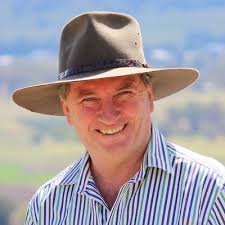
Drought envoy, Barnaby Joyce.
The conversation we must have to prepare for that warmer world is not one Minister Littleproud, Drought Envoy Mr Joyce, or local Member, Mr Drum, are willing to initiate as the essence of where the discussion must go contradicts their fundamental political ideologies.

It was only a week ago that the leader of the CSIRO’s Earth Systems and Climate Change hub, Dr David Karoly, who is known to many in the Goulburn Valley, echoed an earlier comment when he said Shepparton was inline for successive days of 50 degrees Celsius.

Those temperatures combined with a drought, man-made or otherwise, will force acknowledgement of that elusive elephant and with it serious discussion about seeing Australia embrace the idea of a “climate emergency”, something now being discussed by Britain’s House of Lords.


And while we contemplate that idea, it is interesting to note that Australia, according to the Bureau of Meteorology, has just left its hottest March on record.

Saturday, January 19, 2019

Living in news vacuum, yet living in a real world

Many kids live in something of a news vacuum.

Some will cheer and whoop in support of that idea, others would be equally critical of such parenting, reflecting pretty much any position taken in life about most anything.

Backers of the idea argue that young and innocent kids should not have the graffiti of news scribbled on the blank slate that is their nascent minds.

Such a position sadly fails to acknowledge the instinctive resilient capacities of the young and adds only what weight to any issue as to how it is framed by those older people around them.

The idea that in blocking out the news of the day as a way to protect children is really little more than parents refusing to personally engage with the events of the day and so play a key role in helping their children understand whatever is happening and put it in context.

Helping your children understand the news of the day, the news of the world is among one of parenting’s prime tasks.

Inexplicably, at least to me, the same parents who create that factual news vacuum in the name of protecting their children, allow those same kids embrace the most perverse fictions.

Writing in his 2018 book, “Fictions of Sustainability: The Politics of Growth and Post-Capitalist Futures”, Boris Frankel said: “Now, countless children are raised on a diet of blockbuster disaster movies, speculative dystopias and computer games featuring the collapse of civilisation brought about by terrorists, aliens, environmental catastrophes, unstoppable pathogens and other ‘monsters’ of the commercial imagination.”

Apparently, for many kids it is OK to have their behaviours distorted by the products of that “commercial imagination”, but reality is a no, no.

Fortunately, our schools adhere to the facts and even those which engage in the pursuit of fanciful distractions do take their young students on exploratory mental expeditions, allowing them to bivouac in learning places ensuring the expansion of their thinking, helping them better understand the real world.

The arm wrestle between market-driven imaginary mutations and fact-driven realities favours the latter as illustrated recently when thousands of students from across Australia went on strike to protest our government’s inaction on climate change.

The students understand and accept the irrefutable realities of climate change, illustrating that the thousands of striking teenagers had not been locked in a news-free bubble, but were in fact much more aware of what is happening than our dismissive government.

Late last year, The Guardian newspaper reported: “The science is clear, the facts are incontrovertible, and it is unconscionable to us that our children and grandchildren should have to bear the terrifying brunt of an unprecedented disaster of our own making”. 


The news aware students simply know and understand this reality and their schools should be congratulated for encouraging such learnings and parents who ensured and embraced these realities also deserve praise.

A wicked problem defies contemporary or traditional solutions

A wicked problem is one which worsens when subjected to contemporary or traditional solutions.
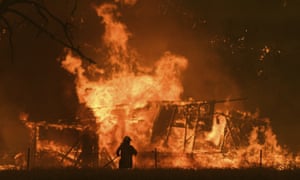
The Queensland bushfires gave us
some remarkably unusual scenes.

Here in Shepparton, we were comfortably geographically remote from the hitherto unseen bushfires in Queensland, but metaphorically living next door in a climate-changed world.
The fires that were unquestionably aggravated by our disrupted climate system and many even say “caused”.

The solution, interestingly, was to fly firefighters and equipment in from all around the country using fossil-fuelled energy sources that further enrich the damage caused by a conflagration with their direct links to climate change.

And so the fires caused by climate change - not at all, according to the business a usual brigade, or almost totally in the minds of climate change advocates - fell directly into the “wicked” realm as in fighting them, that’s the solution, we added significantly to Australia’s carbon dioxide emissions.

Let’s accept for a moment we are facing a wicked problem (we are), but that is rather difficult to grasp here in Shepparton as life appears OK, beyond, that is, a striking absence of rain and severe temperatures.

The Goulburn Valley has fortunately avoided, certainly, of late, the headline-grabbing climate change-driven events that have brought catastrophes to many communities throughout Australia, and the world.

Writing in “Defiant Earth: The fate of humans in the Anthropocene” the Australian author and public intellectual, Clive Hamilton, said, “The greatest tragedy is the absence of a sense of the tragedy”.

The Professor of Public Ethics at Canberra’s Charles Sturt University, said: “The indifference of most to the Earth System’s disturbance may be attributed to a failure of reason or psychological weaknesses; but these seem inadequate to explain why we find ourselves on the edge of the abyss.”

Interestingly as some sort of hint, the America news website has said that: “It’s almost easier to despair or to will oneself into ignorance than to begin to grapple with the future”.

During a recent discussion, it was suggested that the way ahead, the way to deal with this wicked problem, was to embrace meekness, and idea that contradicts the essence of the capitalist economic system that champions aggression.

And turning again to Clive Hamilton, he points out that the forces we hoped would make the world a more civilized place – personal freedoms, democracy, material advance, technological power – are in truth paving the way to its destruction.

Albert Einstein’s suggestion that madness was doing the same thing repeatedly an expecting a different result seems to equate with the solution to the Queensland fires - using fossil fuel powered devices to solve a problem caused by a disrupted climate system that has been primarily unsettled by humans dumping excessive amounts of carbon dioxide into the atmosphere.

A Yale professor of law and psychology, Dan Kahan, says climate change had become a symbol of whose side you are on in a “cultural conflict divorced from science”.


That adds to the wickedness of the problem and so one solution is the immediate change in our behaviours to encourage adaptation, along with a more restrained way of living.