Wednesday, June 6, 2018

GV Health warrants our celebratory recognition

Institutions are greater, or lesser than the sum of their parts.

Evidence of that abounds and that can be found in the positive sense at Shepparton’s GV Health.
Works worth nearly $170 million to improve
Shepparton's Goulburn Valley Health has already started.
An institution is nought more than a collection of buildings and whatever appliances or fittings it’s particular pursuit demands, but it’s the people who populate the institution, those who work there, who make it either “greater” or “lesser”.

A recent visit to GV Health for a day procedure gave me ample time, and certainly, a practical opportunity, to make a judgment - it was friendly, professional and efficient, putting the sword to any belief that public patients are afforded a lesser quality of care than privately insured counterparts.

Of course, emerging from the experience with a good report immediately enhances such life events, but had the outcome been somewhat different, it would have been worse than mischievous not to acknowledge the kindness and friendliness of all.

The Shepparton hospital is most certainly a complex collection of parts and work has already started on a $169 million refresh of the institution that will make it even more labyrinth-like but at the same time a more efficient workplace.

Health care and its associated social assistance is Shepparton’s largest employer and with the broad smiles of helpful and conscientious people being the practical recognition of the broader management at GV Health, we should celebrate our hospital.

The idea of public health, as we see it at GV Health, is as it should be with each of us willingly opening our wallets to ensure health care is there for all our fellows, and ourselves, at minimal or no cost making the private health insurance industry both irrelevant and unnecessary.

However, what we have in Shepparton, as is the case throughout Australia, is entangled in perverse machinations that have evolved over decades as the tentacles of the market economy have been allowed, almost welcomed, into the cash-rich veins of the health industry.

First, it should not be considered an “industry”, rather it should be a service; a service whose aim is simply that of making those who use it, well again and not making those who work within it, rich.
Last week’s “Four Corners” program on ABC TV explored the problems of our burgeoning health industry and expeditiously avoided the ideological debate about private versus public, but was able to point toward many private health patients who had been exploited with costs far exceeding what was expected.

Australia’s public health service is among the best and to keep it there and improve it even more, it seems that upon being elected to any State or Federal parliamentary position, he or she who is elected should be required to immediately forgo whatever private health insurance they might have and so be forced to experience first hand the public health service they are responsible for.

Considering life, it is mostly only personal experience that enables you to make any sort of worthwhile or useful judgement about the services upon which we depend. 

Friday, June 1, 2018

Personal obsessions seem reasonable and not unexpected

Accusations of personal obsessional behaviour seem reasonable and not unexpected.

Family and friends, well, some friends at least, are wary of crossing certain boundaries, of opening the door, setting free those mania’s, unleashing those obsessions, igniting the fire.

And after three days at the annual National Climate Change Adaptation Research Facility (NCCARF) and having just finished reading “The Violence of Climate Change: Lessons of Resistance from Nonviolent Activists” the fire is ablaze and even more intense.

The news, in a general sense is not good with humanity walking blindly into a calamity about which it seems broadly unaware and while those challenges were spelt out at the NCCARF event, many speakers, including one from the Shepparton-based Goulburn Broken Greenhouse Alliance (GBGHA), told of innovative efforts and positive responses from all parts of Australia.

Yes, the news for many was disempowering, but equally others found discussions, often simply through chance encounters with other attendees, inspiring and within that sufficiently encouraging to press on with climate change responses in their towns or districts.

NCCARF director Professor Jean Palutikof, from Griffith University on the Gold Coast, closed the conference saying that just a few weeks before the event she had felt quite depressed about the level of climate change adaption in Australia,  but having seen and heard most of what the disparate group of presenters had to say, and what they had achieved in their respective communities, she felt refreshed and uplifted.

Tatura’s Marisa O’Halloran, one of the speakers, told of innovative work by the greenhouse alliance, fulfilling in many ways what author Kevin J. O’brien had written about in “The Violence of Climate Change”.

O’Brien wrote: “Responses to climate change should be courageous, because it is tempting to be overwhelmed and paralyzed by fear in the face of a problem so large and so complicated. Responses to climate change should be structural, because destructive institutions and systems have developed and solidified over time. Finally, responses to climate change should be creative, because the adaptive complexity of this violence exceeds conventional wisdom.”

Everything Marisa, and others discussed epitomised the responses O’Brien argued were necessary, critical, and courageous.

O’Brien argued that every person of privilege (that’s us) should learn about the effects of climate change on our own neighbourhoods and with that in mind, questions have been put to a few locals, with the answers ranging across the spectrum of doubt, uncertainty, unanswerable questions and, beyond that, simply not knowing what to do.

A Dookie fellow is finding measurable climatic differences to his farming; a Mooroopna friend is noticing hitherto unseen downpours in unlikely places and bushfires in equally strange areas.
  
Climate change cannot be stopped, mitigation is still important, but mostly we should focus on adapting to a future in which thriving as it was understood in the mid to latter decades of the 20th is no longer possible. 


Obsession has produced an inequitable and out of control economy; obsession has unleashed the fetish of consumerism; obsession has taken us down the dark path of energy-rich lifestyles; and, if we are to turn this ship around to take us to a way of life that is caring, friendly, sustainable and free of the present prevailing violence, we need to embrace hitherto unseen obsession.

Wednesday, May 16, 2018

Fidelity to values, ideals, beliefs, passions critical for wellbeing

Fidelity to your values, ideals, beliefs and passions is critical for wellbeing.

Sadly, I have been somewhat unfaithful to mine of late and that lack of loyalty is annoying, personally  hurtful, and it brings on an intellectual dissonance.

Yes, we owe to ourselves, family, friends and others, to be, and say, what we believe in.
Reflecting on my life, it was at its richest when surrounded by a warm sense of community, when it felt as if we were all in this together, when the aim was understood, when altruism prevailed and we were remote from the root values of the market-driven world.

However, seduced by the baubles and trinkets of the consumerist world, I forgot for some time the naturally attractive lessons found in the early 70’s book “Small Is Beautiful: Economics as if People Mattered” by E. F. Schumacher.

Primed by Schumacher and his ilk, I fell into learning about climate change more than a decade ago and it was reaffirmed, after listening to and reading many books by the world’s sharpest thinkers, that small really is beautiful and, unless something hitherto unknown happens within a year or two, then a “small” and restrained way of living is that is open to us.

So let’s talk briefly about values, ideals, beliefs and passions, well, mine at least.

Our addiction to 20th Century development ideals, along with our dependence on what is a broken economic system that favours a few and disenfranchises most, while tearing at Earth’s essence leaves me intellectually struggling to understand why we can’t see the senselessness of our behaviour.

We have known, unequivocally, for nearly four decades that using fossil fuels as an energy source was wrong and yet even today, those able to make the necessary changes to renewable energy still procrastinate, equivocate and lack the requisite courage to kick open the door to give humanity just the slightest chance of finding its way out of this mess.

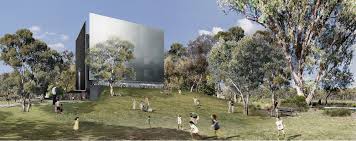
Plans to build a new Shepparton Art Museum (SAM) costing nearly $40 million are controversial, but it seems mostly about the cost and not with regard its environmentally offensive nature. 

Rather than an entirely new building, the City of Greater Shepparton should have turned to existing futuristic-like communications technology to allow the placement of administrative staff at existing buildings throughout the city, freeing up most of its headquarters building in Welsford St, Eastbank, for use as the new SAM.

Our legal processes are similar and so rather than forcing everyone to travel into Shepparton to see and feel the law at work, we should be taking the law to the people, that is we should have a virtual courthouse in every village throughout the district.

The energy we presently rely on for transport will become prohibitively expensive, and beyond that significantly disrupts Earth’s climate systems, human movement will revert to what it once was and local communities will be forced to become more self-sufficient.

Recently it fell to me to defend the idea of a super secondary school for Shepparton and although the consolidation of educational resources has clear benefits, it is an idea that offends beliefs that small is beautiful, a concept that we are going to have get much closer to and better understand as a disrupted climate system forces us to all live in a more localised way.

The new SAM at Shepparton's Victoria Park Lake.

Privately owned vehicles for personal transport, cars electric or otherwise, are problematic, as is air transport; profit at the expense of another’s wellbeing falls into the same purview; privatisation is about private gain at public expense; our taxation system is fundamentally unfair favouring the few and heaping the heaviest costs upon those least able to afford it and unable to pay for legal and financial advice to avoid their moral responsibility of paying tax; our electoral system is flawed favouring a homogenised class of people in our so-called classless society - sortition (choosing names out of hat) will resolve that; yes, work is important, but not so that we have little time for anything else meaning we need to accept artificial intelligence freeing us and enabling us the time to fulfil the promise that flickered during the Renaissance, that is the embrace the arts, literature, science and learning.

We are too rich and wealth equates with an energy use and a lifestyle beyond the Earth’s resources.


Climate change, that is human-induced changes to Earth’s climate system, makes all other concerns redundant and a certain personal calmness, and wellbeing comes from learning about what is happening and why, and then being a part of a positive response.

Friday, May 4, 2018

Tolerance is another of life's double edged swords

Tolerance is another of life’s double edged swords.

Swing the sword one way and life is enhanced, reverse it and swing again and all that is good about life is sliced and untethered.

The good sense applied here by
Joëlle Gergis contrasts with the
nonsense talked by two radio DJs.
A simple example of tolerance could be seen at Shepparton’s Victoria Park Lake.

An expanse of water in the city’s heart was irresistible to power boat owners whom, along with their skiers,  pretty much claimed the lake for some years as their own, and although many grumbled about a minority having almost exclusive use, they tolerated their behaviour.

That all changed a few years ago when the Millennial Drought brought with it distinct difficulties for the lake and in about 2009 significant works changed it to what we see today — a friendly expanse of water, suitable for a variety of passive pastimes with the lake now an integral part of the environment in which it sits.

That change has a different intent, is welcomed by many, maybe most, but still it demands a degree of tolerance from a few, mainly those who continue to champion the idea of power boats on the lake.

Another change to the lake and its environs is coming, well the prepartory works have already started, for the building a new Shepparton Art Museum (SAM) on the banks of the lake — a service station that epitomises the questionable fossil fuel industry is being removed and replaced by symbol of a changing culture in the city.

The new gallery is not welcomed by all and so now the tolerance boot is on the other foot; first is was those alarmed by the offence of power boats who were forced to acquiesce and now the quiet and often intangible beauty of art, along with the equally subtle beauty of the environment has a grasp on the city’s imagination.

For the past couple of centuries industrialisation and its sibling, consumerism, has transformed life on earth, frequently for the better, but often it’s quite the reverse. Some have championed what has been happening, others, rather, have simply tolerated it.

The idea of tolerance has been simmering for some time and as history illustrates it has been the root cause of endless societal disruption bringing endless difficulties and with the latest example being the military intervention in Syria, an action some applaud, some decry and most simply tolerate.

Joëlle Gergis (centre) at the launch of 'Sunburnt
 Coutry"with Professor David Karoly (he mentored
 Joëlle and lanched the book) with the Executive
 Publisher at MUP,  Sally Heath (far left) and the
 Dean of Science at University of Melbourne,
Professor Karen Day.
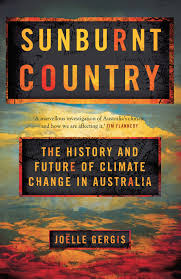
Recently, sitting in a coffee shop waiting for the late train back to Seymour after hearing Dr Joëlle Gergis (she’ll be in Shepparton in November) talk about her new book “Sunburnt Country: The history and future of climate change in Australia” in which the climate scientist uses plain language to explain the reality of climate change.

My coffee was accompanied by two fellows chatting on the radio about the delusions of those endorsing climate change science and talked with a confidence that camouflaged their deficit of knowledge and understanding of something quite unlike that ever seen before and which threatens the safety and stability of civilisation.

There was nothing I could do except tolerate the nonsense on the radio and tolerate it I did, but in doing that remembered the Edmund Burke quote: “The only thing necessary for the triumph of evil is for good men to do nothing”.


So, is to tolerate something doing nothing? Well, yes it is, but in some instances it is essential except in those moments when people pollute our environment and risk life as we know it.

Friday, March 30, 2018

Shepparton people know or care little about sea level rise

Shepparton people mostly know or care little about sea level rise.

Why? Well, it is geographically irrelevant as it has none, or almost no effect on the daily lives of people in the Goulburn Valley.

Most see it as situationally unimportant as the nearest ocean is about 200 km away and on the other side the Great Dividing Range, and as Shepparton is about 115 metres above sea level concerns about rising seas simply don’t compute.

And of course that is correct and so the ocean shoreline is something mostly preserved in the minds of Sheppartonians for holidays; sea level rise is most certainly not front of mind.

However, the behaviour of the world’s oceans is, interestingly, something we should be acutely curious about as our behaviour here, as remote as we might be from the world’s oceans, impacts, in turn on their behaviour, or more correctly the world’s ice sheets that hold sufficient fresh water to raise the levels of our oceans by more than 60 metres.

Many argue such massive melts and sea level rise are unlikely this century and the Intergovernmental Panel on Climate Change (IPCC) has suggested only about a metre by 2100, but scientist Jason Box who is studying ice melt in Greenland believes we will see two metres by the end of the century.

And again, that is irrelevant to most in the Goulburn Valley as two metres is wholly inconsequential to people here, or is it?

Well, yes, it is a concern, or should be. 

We can be distracted by many things when the discussion turns to sea level rise, but in essence it is connected directly to human behaviour; our behaviour right here in Shepparton and whether or not we remain locked into our energy-rich ways or do we argue for, and support structural changes  to our community, including such things as the embrace of renewable energy and a total rethink of how we move about the city, and so what our city looks like and how its infrastructure works.

Shepparton is strangely contradictory for it is in one sense modern and sophisticated and in another locked into values, ideals and habits of the mid-20th Century and it is our adherence to the latter that manifests itself as sea level rise.

Writing recently in The Guardian, Jeff Sparrow discussed the wonder of technology, something from which Shepparton his richly benefitted, and quoted author Elizabeth Kolbert, who said: “It may seem impossible to imagine, that a technologically advanced society could choose, in essence, to destroy itself, but that is what we’re now in the process of doing.”

That observation, Sparrow wrote, was made 13 years ago and the warnings from scientists, he added, have grown both more specific and desperate – and yet the march to destruction has only redoubled its pace. 


Hard to grasp, hard to get you head around? Of course it is, but understand it we must and to better do that, read Jeff Goodell’s book, “The Water Will Come: Rising Seas, Sinking Cities, and the Remaking of the Civilized World.”

Tuesday, March 13, 2018

Sitting through an exhausting council meeting

Sitting through a recent meeting of the City of Greater Shepparton council without saying a word was exhausting.

Remaining mute as your heart breaks and you weep (metaphorically) is tough, damn tough when everything you know, have heard about from the world’s sharpest thinkers, and what you have read from philosophers, scientists and their ilk, some dead, but most still living, is not even considered when decisions are made about our city’s future.

The responsible men (and women) of our city may have worldviews and opinions about many things, but those thoughts and ideas are constrained by values, cultural and otherwise, that have solidified in modernity; the last two centuries or so when progressive thinking was about making things bigger and smaller, stronger (not necessarily longer laster), faster, slicker, and grounded in the belief that growth is the epitome of good.

However, the growth equation has always been fundamentally flawed - endless growth in a finite world is not only impossible but to pursue it with the enthusiasm that surreptitiously drives our council’s decisions flirts with irresponsibility.

There comes a time, and it is now, when someone, somewhere with influence must declare that the progress as it is commonly understood today is not what we want rather, we should be turning our attention, and our naturally innovative ways to creating and building a Greater Shepparton able to survive and thrive in a century  quite unlike anything experienced.

Many good things are happening in Shepparton, and have council’s imprimatur, such as solar farms and pressure on our State Government to improve our rail infrastructure, but all things, including our wonderful new Shepparton Art Museum (SAM) are coloured by the intent that they will add to the city’s growth.

To be fair, many see the new SAM as something that will elevate the city’s cultural climate, but frequently its supporters are forced, sadly, to justify its nearly $40 million cost as major plank in Shepparton’s financial future.

It’s equally sad, and disappointing when most everything that happens here, and everywhere else for that matter, has its success measured in fiscal terms (growth), when the truly important gauge of something’s value is less tangible, emanating from the heart; the elusive success that is about human happiness.

Most equate happiness with financial growth and the modern understanding of success, but repeated international studies have shown that happiness plateaus at quite a low-level of income, particularly once the basics of life are covered.

The City of Greater Shepparton's proposed new
 art gallery (SAM) at Victoria Park Lake.
Shepparton’s proposed ring-road was on the agenda at the recent meeting (many in the public gallery, armed with signs, came to hear that debate) and although controversial for some, fearing it will injury the amenity  of their homes near the suggested route, it is something we need to avoid, completely.

A ring-road is an integral part of the fossil-fuelled agenda and rather than entrenching it, even more, we need to be imagining ways in which we can create a community, a society, a way of life that further distances us from something that is taking us even closer to the abyss.


Industrial civilization, one that wants growth, profit and “more” is the antithesis of what we need and sitting silenced through a council meeting would be much more relaxing if discussions were free of the rigidity imposed by the status quo. 

Sunday, March 4, 2018

We are either “Vogtians” or “Borlaugains”

Most in the Goulburn Valley are either “Vogtians” or “Borlaugains”.

That is, with a few exceptions, they have a vision for the rest of this century being rooted in either technological wizardry leading to growth or, for the “Vogtians”, a willingness to step away from the relentless idea of “more”.

Author Charles C. Mann alerted us to the work of Norman Borlaug and William Vogt in his book “The Wizard and the Prophet: Two Groundbreaking Scientists and Their Conflicting Visions of the Future of Our Planet”.

He wrote: “Prophets look at the world as finite, and people as constrained by their environment. Wizards see possibilities as inexhaustible, and humans as wily managers of the planet”.

Yes, we have many here as I personally know both prophets and wizards.
Mann continues: “One views growth and development as the lot and blessing of our species; others regard stability and preservation as our future and our goal. Wizards regard Earth as a toolbox, its contents freely available for use; Prophets think of the natural world as embodying an overarching order that should not casually be disturbed”.

The ideas and values of Borlaug prevailed personally from boyhood through to my early fifties when an almost sleeping penchant for what was public as opposed to private arose from its slumber slamming into my consciousness, waking, again, my Vogtian beliefs.

Author Charles Mann noted early in his book that the future of the world depended on science, and politicians being guided by science, and, of course, he was correct.

The Goulburn Valley is recognised as one of Australia’s food bowls and that niche has been carved out through adherence to ideas and values that reach back, and beyond Borlaug’s tireless efforts that led to what became known as the “green revolution”.

The Nobel Prize winner was relentless in his efforts to create seeds that given sufficient fertilizer and water would survive various diseases and other threats to thrive, producing bountiful crops.

It was his belief in science and its ability to feed the hungry that manifested what is known today as industrial farming; such farming has saved billions of lives, but in doing so has ruptured a nexus between humans and their environment, a connection William Vogt believed should never have been broken.

However, broken it is and now that fracture is manifesting itself as a disrupted climate system that many scientists and authors see as humanity’s greatest-ever challenge.  

And we don’t know what to do. We just don’t get it.

Adherence to Borlaug’s vision has enriched the world in many ways, and the Goulburn Valley has been among the beneficiaries, but now we find ourselves in a cul-de-sac; a dead-end street and we need to look to the likes of William Vogt, and science to find an exit and navigate out way clear of this difficulty, an escape no one alive today will experience as the changes to our climate are baked-in, and so are with us for hundreds of years, if not thousands.

Well, we really do know what to do, but those changes to our behaviour are so socially unacceptable and foreign to what we are accustomed that little will happen until it is too late, which it largely is already.

Vatican climate scientist, Veerabhadran “Ram” Ramanathan, recently noted that the fate of the world was no longer in the hands of the researchers and academics, “It’s now up to us,” he said.


The final word goes to Mann: “One (wizards) sees nature instrumentally, as a set of raw materials freely available for use; the other (prophets) believes each ecosystem has an inner integrity and meaning that should be preserved, even if it constrains human actions. The choices lead to radically different pictures of how to live. What looks like a dispute over practical matters is an argument of the heart.”