Showing posts with label compassion. Show all posts

Sunday, October 21, 2012

Cherish your friends, for they may leave without notice


Sometimes a friend leaves unexpectedly.

The Stutz Bearcat -
 looking at it, I was
in 'communion'
with my friend.
That sudden and unexpected exit leaves those of us still sitting at the table with a strange hollowness and a legion of answered questions; our friend took with him much of the knowledge that enriched our breadth and depth.

Sometimes such a sudden departure drives a re-examination of personal values and beliefs manifesting thoughts about what importance we put on a scheduled, but relaxed and casual lunch.

To approach such a lunch with the distinct sense of fatalism would in fact probably be fatal for the friendship that initiated the gathering.

Lunch with a friend is, in most instances, not a pessimistic affair, rather quite the reverse and so how do you celebrate the friendship, enjoy the company and yet do it joyously knowing full well that the randomness of life could intervene removing you or another, anytime, from the list of dinners.

Any antidote to such a dilemma is as different as those involved, but curiousity can help dislodge it from the shadows; curiousity spiced with humour, compassion, care, consideration and interest in what it is that ignites a friend’s passions.

Such values are not personality specific, but their application hinges on the root of friendship, trust, and so the advancement of any friendship, fleeting or enduring, hinges on the richness of that trust.

My friend, who left without warning, practiced a trade in which trust was the driver and strangely while trained in skills about caring for the frailties of the human body, privately he was passionately interested in the hard-edge mechanics of motor cars, in fact anything with wheels.

Trusting my friend’s judgement I visited the newly established Shepparton Motor Museum, in which he had been deeply involved and was in fact delivering his latest purchase (a rather old French moped) when he took his leave.

Walking in the door my eyes fell upon a beautifully restored Stutz Bearcat from early last century. It was not his type of car, I suspect, as he was taken by beautiful and different European cars from later in the century, but as it oozed the perfection, the attention to detail and the mechanical sophistication of its era, I was, for a few minutes, in communion with my friend.

That sense of closeness remained as I wandered about admiring the wonderful collection of cars, motorcycles and bicycles – the museum wasn’t built for that purpose, but for me it was like a memorial to my friend.

Death is the only certainty in life and the embrace of friendship can enrich what is an uncertain journey and should that chair at the dinner table be left unexpectedly empty, recall that the randomness of life is non-negotiable pressing the belief that every moment matters.

Sunday, July 15, 2012

The extremes of the Tour will resolve humanity's dilemmas


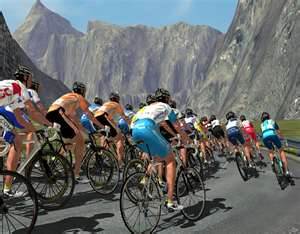
The Tour de France - the essence of what
 it is can resolve humanity's
 dilemmas.
Watching the Tour de France I became puzzled as to why men push themselves to such physical and mental extremes and along with that why we, their less focussed fellows, watch with such adoration and dedication.

Such passion is not strange, scarce or unique, nor is the human fascination with watching others search for the extremes of their abilities, physical or mental.

The roads of France in July each year equate in a modern sense with the “excitements” of gladiatorial Rome, as do the feats of men and women on any of the world’s many sporting arenas from the bellicosity of boxing to the beauty and finery of ballroom dancing.

Men and women test and push themselves to their limits and we watch with unalloyed enthusiasm.

Sport, it seems, has evolved to become the modern construction of war; that human confrontation that drives our emotions, ignites  passions responding to a siren-call that leads to outcomes commonly considered everything from horrible to honourable, but never to be missed.

So we watch with our emotions unleashed, our infatuations running free and, for maybe only a brief moment, we too are vicariously there, sweating, experiencing and feeling the heat of the spotlight, although, unlike the participants, our only investment is time.

Our urge to physically and mentally exhaust ourselves can be philosophically understood, but even participants would probably be at a loss to explain their behaviour as motivation seems to emerge from deep within the human psyche.

Motivation is like the many-headed Hydra monster of Greek mythology – it has many faces; identify one and there is another, and another, and then another.

Sport voyeurs and the participants they watch are stimulated and inspired in Hydra-like ways, but within that they are strikingly similar and yet as different as a blink and a wink.

Interestingly, the passion, excitements, addictions and distractions of sport, for participants and spectators alike, embody the values that are taking humanity closer to the abyss.

We are watching, but not taking any note of where it is we are going nor, it seems, do we care.

Distracted by the titillations of sport, and an endless array of technological entertainments, we seem immune to and so ignorant of the fact that we have exhausted our world’s environmental sinks and are consuming our way to catastrophe.

Sport, and this “loudness” of other distractions are not of themselves individually troublesome, but they are integral to the machinations of a way of life that has disrupted earth’s ecological balance.

Enthusiasm, passion, patience, commitment, resilience, energy, compassion, team-work, single-mindedness and tenacity are the ingredients for success in the Tour de France.

They are, also, what is creating troublesome times, but applied in pursuit of different goals they will resolve our dilemmas.


Tuesday, March 22, 2011

Violence never resolves an issue, rather leaves a weeping wound

Violence has never resolved an issue, rather it has left a weeping wound that will undoubtedly flare-up again ensuring further distress.


Moamar Gaddafi
 Memories are usually worsened and enriched by time and although a return to confrontation, be it verbal, cultural or violent, may appear new, a cursory look at history will show how the past influences the present.
What had been happening in Libya was simply not decent and what is happening now with Western powers attempting to restore what they see as decency with what is an indecent act appears a contradiction.
Articulation of a workable solution is difficult, if not near-impossible, but the answer is not to be found in killing people and destroying the country’s infrastructure.
History illustrates, repeatedly, that violence will bring a brief period of calm when people, regardless of whether they be the aggressor or those being attacked, are exhausted and retreat from the fray to refresh their resources or consider their wounds.
Once that moment of calm passes, and sometimes it can be years or even decades, a cultural memory will re-ignite stories, right or wrong depending on your view, passed from generation to generation and disenchantment that sees a solution in violence will erupt.
Developed countries have always turned to violence to achieve their aims, and while that brutality is seen to be to mostly people and infrastructure, the real, and largely unseen, damage has been to the world’s finite resources and its biosphere.
What’s happening in Libya is a symptom of how many in the world resolve their difficulties today and so they mostly act with little regard for questions beyond what they can see.
Questions obviously need to be asked about Moamar Gaddafi’s appropriateness as a leader, but to simply demolish his infrastructure to remove him, if not kill him, is equally inappropriate as it simply allows another with similar qualities to fill the void and so the cycle begins again.
Revolutions need not be inculcated by force, rather, with most successful changes such an uprising needs to filter up from the bottom embracing care, compassion and kindness as it assumes control almost by osmosis.