Saturday, August 18, 2012

Statistically about average; factually, distressing


An uncle died on Saturday. He was 85.


My uncle Roy breathing
life into his bagpipes.
Considered dispassionately and looked at in a purely analytic way that was about right, rather a little above the average for Australian men.

Irony however abounds, for that same day I had received an update about a family reunion of which my uncle would have had a pivotal role for, until his death, was one of four siblings from the family of seven still alive.

As a young boy all my uncles seemed invincible; big, strong and resourceful men and my aunties, women equally strong, resourceful and wonderfully tactful and tenacious.

Time erodes all qualities making even the perfect dysfunctional and a death such as that on Saturday triggers thoughts of personal mortality.

Like all people, uncles fill the whole spectrum of passions, behaviours and personalities from less than pleasant to excellent and conscious of how many glorify the dead and although eager to avoid that, “excellent” clearly dominates my thinking.

My uncle was at times a serious man, although not someone I had ever seen angry or negative, I am sure he had been both, but he loved to laugh and did so with enthusiasm.

He appeared at first glance a contradictory fellow living and working as a farmer with an attachment to many of the earthy fundamentals of life and yet enjoying the subtleties of music delighting and entertaining many with his saxophone or stirring the blood as he stood in his kilt breathing life into his bagpipes.

A sheep dog at work.
Beyond that he inherently grasped of the mysteries of how a dog can be encouraged to yard sheep and subsequently trained many champions.

Although not implicated intimately in my life, he was, in a distracted sense, something of a mentor as I almost unknowingly warmed to his diverse passions and interests and upon reflection he was an inconspicuous inspiration.

Obviously he was not unlike his father who, among other things was a sleeper cutter and who played, beautifully, the violin. I can still remember that as an amazed young boy I watched and listened as my grandfather, “Pa”, put down his violin, took up a handsaw and produced music.

Born on the doorstep of the Great Depression, my uncle lived through some obviously challenging times, World War Two being an example, but looked at from earth’s present state – diminishing irreplaceable resources and a worsening environment – he and others of that generation enjoyed something of a “purple patch” for humanity as it was rich in both promise and opportunity.

My uncle realised much of that promise and opportunity, but within that was both decent and honest.

He was as beautiful man and among other things led me to barrack for the Western Bulldogs.

Sunday, August 12, 2012

Exponential population growth is exhausting earth's resources


Humans have historically exhausted what existed and then moved on.

Our world is full and it is
 time we started listening
to those with ideas
about slowing exponential
 population growth.
The earliest small groups of humans, or tribes, settled briefly and when the immediate environment was no longer viable or provided the live-giving resources they needed, the group simply moved on.

Space was never a problem and the richness of the planet continued just over the horizon and so it was simply a matter of shifting your belongings, as few as they were, and re-establishing life in the “foyer of a new supermarket”.

The idea that we could always move to a new place has become entrenched in our psyche and humans have always looked longingly to the horizon convinced the solution to their difficulties were “just out of sight”.

That assumption has been evident throughout our history right from when the first “thinking man” emigrated from Africa to the dream of many that we could colonize other planets.

When our numbers were few and we had room to spare, the dynamic of staying for a season or two and then moving-on made complete sense.

When we arrived an area was rich with life and by the time we left it was pretty well exhausted, but as human demands were relatively small and, importantly, infrequent, nature had a largely uninterrupted chance to repair the damage.

The idea that our planet was voluminous and forever giving has become entrenched in human thinking, leaving many of us with the “throw-away” mentality.

Mostly humans everywhere have always exploited what existed, customarily to civilization’s detriment, and then moved on.

Most civilisations, history illustrates, survive for about 1000 years, except for those that were founded upon a rich stream of nature that saw the essence of life refurbished annually or more frequently.

Nature has put out the “No vacancy” sign ending our free-wheeling approach.

We don’t, however, appear to be paying much attention to the fact that the world is full as we continue to live as resources upon which modern life depend are endless – they are not and if don’t think the world is full, ask yourself why the only survivable space for many families in India, for example, is literally on a rubbish tip.

What do we do?

We need to support those with ideas to slow the exponential growth of human numbers, for if we don’t do it voluntarily, a pandemic will insist, killing billions, and we need to embrace and apply the grossly misunderstood idea of equity.

How do we do that? First, accept and understand the damaging reality of exponential growth; second, abandon narcissistic individuality, live altruistically; and, third, embrace equity, fairness and justice.

Australia’s asylum-seeker dilemma is simply about people moving to escape political crossfire and resource depletion – they are simply exercising humanity’s historic exit option.

Wednesday, August 8, 2012

An ABI makes platitudes, adages and intentions impotent


Platitudes about how you should live your life abound, but fate will inevitably intrude to make many of those adages irrelevant and the best of intentions equally impotent.

Fate or the randomness of life can disarm any or all of those adages and so change, without notice, the essence and intent of your life.

Preparation and planning amount to nought when fate arrives to dispense an irrevocably life-changing moment - moments that can actually be that or a “moment” that is the product of a life of years lived in confrontation with a dilemma that was eroding an individual’s being.

Interestingly, today is the beginning of a week originated to focus community attention on the outcome of those “moments” - an acquired brain injury.

This is “Acquired Brain Injury Awareness Week” when people are being encouraged to “Bang-on a Beanie” and “give a damn” about those who, for whatever reason, are wrestling with the implications and complications of an acquired brain injury (ABI).
To some the dilemma is known as a traumatic brain injury (TBI), that is an injury caused by an external force to the brain such as a motor vehicle accident, sporting accident, and falls or a blow to the head.

One in 12 Australians, that is 1.6 million, or a billion people worldwide, live with an ABI. That, however, is a conservative estimate as many people with an ABI are either misdiagnosed or go through life undiagnosed.

Sadly it is often the most vulnerable people in our communities who are affected by ABI but never diagnosed, including: indigenous Australians; homeless people; survivors of domestic violence; soldiers who return from war; and people in the criminal justice system.

Those who live with an ABI do so: because the "one punch didn't kill"; have had falls, a motor vehicle accident, or had some other trauma such as concussion or repeated knocks to the head from sport; or suffer a degenerative disease, a brain tumour, Dementia, Parkinson's, Huntington's, Multiple Sclerosis, Cerebral Palsy and other brain illnesses; or suffered a stroke or hypoxia (lack of oxygen); or their “moment” has arrived because of alcohol or drug abuse.

More than 11 000 women are diagnosed in Australia each year with breast cancer, but about twice as many people are diagnosed each year with ABI.

A brain injury, except in extreme cases, can pass unnoticed in the cacophony of life as the difficulty can manifest in ways not as apparent as a limp, but can be as disabling and personally shattering as an earthquake, but to observers be little more than a ripple-free pond.

Brain injuries can be, and are, lonely and alienating so as with any other human relationship all ABI suffers seek is understanding, friendship and warmth.

Sunday, July 29, 2012

We need to make our conventional thinking revolutionary


Author, Thomas H.
Greco - who argues
 that human life
thrives best on
co-operation rather
than competition.
Continuing with business as usual is similar to maintaining the status quo, needing only conventional thinking.

Switching to and understanding how we could be fulfilled and content by working fewer hours, demands revolutionary thinking.

Such innovative thinking begins with the abandonment of cherished, but seriously dated concepts and then their replacement with something new; something that sits comfortably with our evolving world.

Agile, athletic and energetic thinking will help us understand the advantages of that new paradigm; a paradigm that without option we have to theoretically, politically and practically understand, and adopt, because of the damage we have inflicted on the equilibrium of our climate.

Fulfilment in life for all thrives more on co-operation than competition and as Thomas H. Greco writes in “The End of Money and the Future of Civilization”  ….”to recognize that we all have fundamental interests in common; and to organize and co-ordinate our actions to achieve common goals”.

Working a four-hour day is about common goals and co-operation, but it is a concept that is unquestionably beyond the comprehension of most and being wholly disruptive it will end, without question, life as we know it.

Disturbing as that might sound it is in fact a good thing for life as it is abounds with inequity; an inequity resulting from a globalized economy being forced upon on a world-society still fundamentally driven by localism.

We have a globalized economy – money travels uninhibited by national borders, but even in the relatively economically tiny Australia we, in Tony Abbott’s words, “must turn back the boats”, illustrating resistance to a globalized civilization.

The growth mandate of the globalized economy clearly puts profit ahead of people and even a cursory look at world circumstances illustrates that many have been brutalized and plunged into poverty through pursuit of that tumour-like ideal.


Albert Einstein.
That unrelenting quest for growth is exactly what has brought us to this position and that causes me to think of Albert Einstein’s observation that the thinking that has led to this will not be adequate to take us beyond it.

Considering Greco’s observation about the importance of co-operation ahead of competition and Einstein’s suggestion that we need to refresh and invigorate our thinking, it appears obvious, at least to me, that we must willingly surrender many of modern life’s trappings.

Many draw their optimism from technology and human ingenuity pointing to our magical modern life as justification of their faith, but embedded in that conviction is a disturbing indifference to the science on which that celebrated technology and equally acclaimed ingenuity depend.

Most everything we enjoy in our modern world depends on science and yet we ignore that science at our peril; a science that unequivocally declares that we, because of our behaviour, have wounded earth’s atmosphere.

Sunday, July 22, 2012

The importance of Schumacher's 'smaller' life


Nearly 40 years ago we were urged to embrace a “smaller” life.

The late E.F. Schumacher.
German-born British economist, E.F. Schumacher, developed the concept of intermediate technology and wrote about small being beautiful.

Schumacher’s idea quickly developed something of a cult following, but proved inadequate in the face of the growth-juggernaut that crushed all 20th Century alternatives.

The appeal of growth has swept all before it, but promises of riches for all are unrealized with, in fact, many being plunged into poverty.

Some, very few, have become fabulously rich and many are equally fabulously poor.

Schumacher, who died in 1977, wrote about his ideas in his book, “Small is Beautiful”.
Sadly, those with the power in the early 70s took no note of Schumacher’s advice and today the world suffers because of those intellectual inadequacies and marches blindly toward the abyss because of that “short-termism”.

Today we need to turn away from the corporate structure of the world and work with urgency toward the concept articulated by Schumacher.

There is an urgency for “smaller”, which works in tandem with “slower”, and along with those concepts there is a need for an intense focus on localism.

We all need to work fewer hours and enable the enrichment of our lives through the freeing up of more purposeful leisure time.

Working hours should be restricted to four-hours a day, no overtime and no double-shifts, with those limitations being relaxed significantly for small privately owned businesses (employing no more than four people) or genuinely publicly owned and run enterprises, such as health, law and public transit systems, but not military forces as traditionally understood.
Some argue that a change should come from the bottom up, but such a change is so dramatic and launches us into such a significantly different paradigm that it needs to be a top-down led systemic change.

Such change demands leaders with hitherto unseen courage and a deep sense of fairness, individual rights and equality.

Schumacher's
 book.
Such super-souls are rare, but to ensure the future has a human history it is time that person; a compassionate, understanding, bold, patient and forgiving person stepped forward.

Those leaders need to be forthright about the incorporation of markets and government: markets as elucidated by Schumacher and a genuinely transparent democratic government unencumbered by the financial machinations that presently have civilization in a choke-hold.

A cursory look at the world economy illustrates manipulation of many by the power elite giving conspiratorial theorists something genuine to chew on, but conspiracies only become realities when good men do nothing.

Those driving the hedonistic growth economy promise a better life, but say nothing of the environmental or human costs while those of the Schumacher mindset promise only austerity and hard-work, but a good life.


Sunday, July 15, 2012

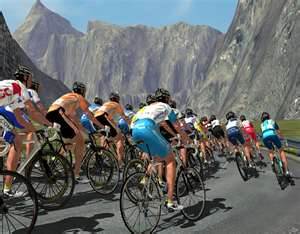
The extremes of the Tour will resolve humanity's dilemmas


The Tour de France - the essence of what
 it is can resolve humanity's
 dilemmas.
Watching the Tour de France I became puzzled as to why men push themselves to such physical and mental extremes and along with that why we, their less focussed fellows, watch with such adoration and dedication.

Such passion is not strange, scarce or unique, nor is the human fascination with watching others search for the extremes of their abilities, physical or mental.

The roads of France in July each year equate in a modern sense with the “excitements” of gladiatorial Rome, as do the feats of men and women on any of the world’s many sporting arenas from the bellicosity of boxing to the beauty and finery of ballroom dancing.

Men and women test and push themselves to their limits and we watch with unalloyed enthusiasm.

Sport, it seems, has evolved to become the modern construction of war; that human confrontation that drives our emotions, ignites  passions responding to a siren-call that leads to outcomes commonly considered everything from horrible to honourable, but never to be missed.

So we watch with our emotions unleashed, our infatuations running free and, for maybe only a brief moment, we too are vicariously there, sweating, experiencing and feeling the heat of the spotlight, although, unlike the participants, our only investment is time.

Our urge to physically and mentally exhaust ourselves can be philosophically understood, but even participants would probably be at a loss to explain their behaviour as motivation seems to emerge from deep within the human psyche.

Motivation is like the many-headed Hydra monster of Greek mythology – it has many faces; identify one and there is another, and another, and then another.

Sport voyeurs and the participants they watch are stimulated and inspired in Hydra-like ways, but within that they are strikingly similar and yet as different as a blink and a wink.

Interestingly, the passion, excitements, addictions and distractions of sport, for participants and spectators alike, embody the values that are taking humanity closer to the abyss.

We are watching, but not taking any note of where it is we are going nor, it seems, do we care.

Distracted by the titillations of sport, and an endless array of technological entertainments, we seem immune to and so ignorant of the fact that we have exhausted our world’s environmental sinks and are consuming our way to catastrophe.

Sport, and this “loudness” of other distractions are not of themselves individually troublesome, but they are integral to the machinations of a way of life that has disrupted earth’s ecological balance.

Enthusiasm, passion, patience, commitment, resilience, energy, compassion, team-work, single-mindedness and tenacity are the ingredients for success in the Tour de France.

They are, also, what is creating troublesome times, but applied in pursuit of different goals they will resolve our dilemmas.


Sunday, July 8, 2012

Understanding how much is enough and imagining the solution


Robert and Edward
 Skidlesky's book.
Considerations about what is and what isn’t the good life are as common as opinions: everyone has one.

However growth ideologues have, in contemporary times, hijacked and distorted the human sense of what is worthy and marketed their contorted interpretation of the good life.

The modern rich, developed world is populated by people who equate the good life with accumulation of all it produces, along with the imagined enjoyment of the pleasures that stash of “stuff” brings.

Others have quite a different view and so liken the good life to one of privation and for some the higher life, or good life, only arrives after an ascetic life.

The debate about what is the good life and how you access it is as old as man, but rather than closing in on the answer, it is becoming more remote.

Many equate the good life and happiness with growth and wealth, but extensive and world-wide research point to weaknesses in that argument illustrating that once fundamental needs are answered, the good life and happiness rests on other immeasurable “goods”.

Writing in their 2012 book “How much is enough?: Money andthe Good Life” Robert and Edward Skidlesky said: “The basic goods are qualities, not quantities, objects of discernment, not measurement”.

Those “goods”, according to the Skileskys are health, security, respect, personality, harmony with nature, friendship and leisure.

Personality is about one being able to frame and execute a plan of life that reflects their tastes, temperament and conception of the good, while leisure must be accompanied by the term “purposeful”.

Interestingly, most men live much longer than they ever did, but that cannot be attributed to growth and nor can growth claim those other basic “goods” mentioned earlier.

The United Kingdom has doubled its per capita income since 1974, but residents have not tightened their grip on those basic goods, and in some respects they now have fewer of them.

“We have chased after superfluities and neglected necessities,” the Skidleskys wrote.

The good not mentioned by the Skidleskys is “imagination”, probably the most powerful, and underused, attribute of the human repertoire.

People of all stripes are obedient to the growth mandate and through a lack of imagination seem unable to conceive of a world in which they could easily and regularly access those basic goods through the abandonment ego boosting consumption.

That consumption, clearly indicated by a host of respected reports, has the world on a perilous path and so until we can imagine the good life without the need to exploit finite resources we will stumble blindly toward the abyss.

The good life waits, but our inability to forego present delights and embrace that new actuality is what darkens its dawn.